For groups with 30+ locations

An online ordering system for restaurants with many brands, locations and POS systems

Your own app and website on one menu and one backend, connected to the POS at every location. We build it on top of your stack and run it after launch.

Under 10 locations on one POS? A ready-made platform costs less

Takes two minutes. Max replies within 1 business day, and an engineer joins the call.

CaseSizl, a Chicago dark-kitchen chain: ordering app rebuilt in 2.5 months

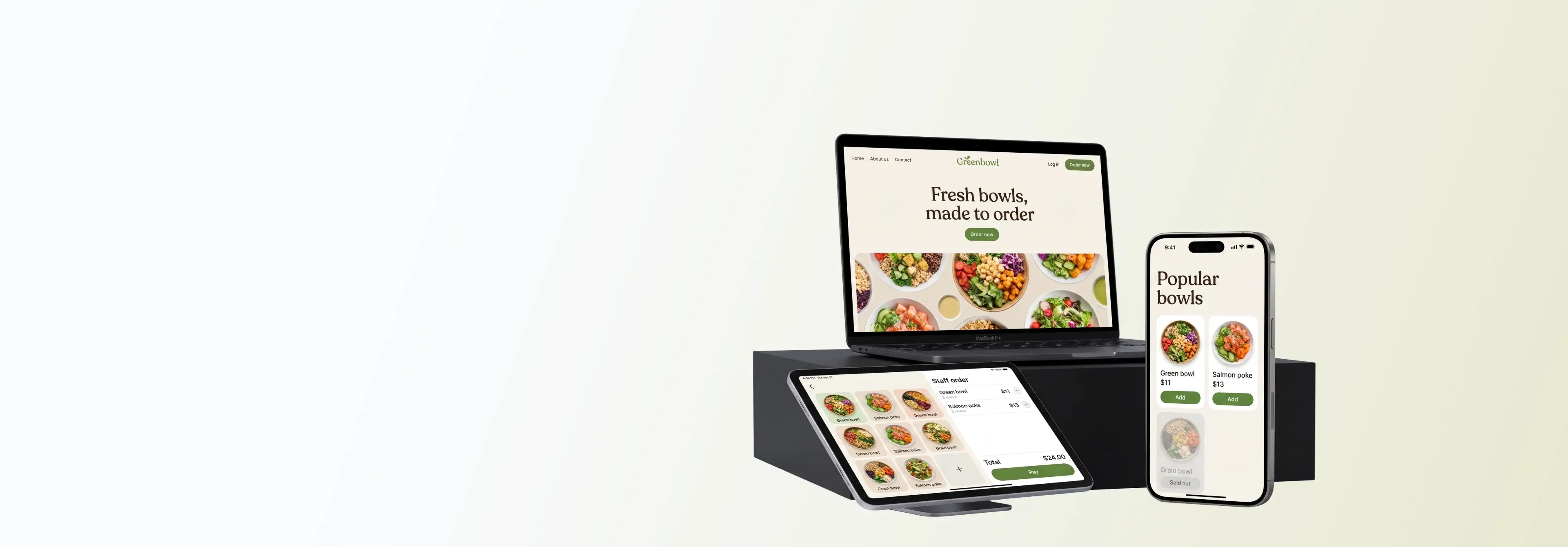
Ordering app and website: one location's menu, 86'd items grayed out

In short

An online ordering system for restaurants takes pickup and delivery orders through your own app and website and sends them to the kitchen through the POS. For a group, the hard part isn't the app. It's keeping one menu, prices and 86'd items right at every location when brands run different POS systems. dev.family builds the app and website on one backend connected to each location's POS, with loyalty and delivery, and runs them after launch. Under 10 locations on one POS, a ready-made platform such as Toast, Square or Owner.com costs less.

What's inside

What goes into an ordering system for a group

  • Availability

    86'd items per location

    Availability is tied to the location, and guests can switch to another one. Stock is checked again before payment.

  • Preorders

    Orders for later, in time slots

    Scheduled orders fit inside the card hold window, with a cap on orders per slot.

  • Statuses

    Separate flows for delivery and pickup

    Including “running late” and a refund for a single missing item.

  • Upsell

    Suggestions from order history

    Built from each guest's past orders, reviewed by your team, never showing 86'd items.

  • Modifiers

    Free up to a limit

    “N free, the rest paid” for extras, sauces and utensils.

  • Releases

    Soft and forced updates

    Push an app update to every guest from the admin panel.

Prices and timelines

What an online ordering system costs and how long it takes

Ready-made platforms charge per location or per order. Your own system costs more up front and nothing per order.

OptionWhat you pay or how longSource
Online ordering in your POS (Square)$0, $49 or $149 per location a month; online card fee 2.9% + 30¢ on paid planssquareup.com/us/en/online-store/plans, checked November 9, 2026
Ordering platform for small chains (Owner.com)$499 per location a month, or $249 a month plus 5% per orderCostBench, October 30, 2026; Sauce, January 26, 2026 · checked
Website and app on a platform (Flipdish)$199 per location a month billed annually, $249 monthlyflipdish.com/us/pricing, checked November 9, 2026
Delivery app commission on a delivery order15–30% DoorDash, 20–30% Uber Eatsmerchants.doordash.com and merchants.ubereats.com pricing, checked November 9, 2026
Agency estimate for a multi-location ordering system$60,000–$110,000 and 4–6 monthsTekRevol, August 5, 2026. Agency estimate, not market data · checked
Share of restaurant traffic that's off-premisesNearly 75%National Restaurant Association, April 16, 2025 · checked
Your own app and website on your POSFrom $100,000 . Exact estimate after the Assessmentdev.family · iOS, Android and web on your menu and POS · checked
How long your own app takes2.5 months to rebuild an ordering app on an existing backend, plus a month of testingSizl, Chicago · dev.family case, November 9, 2026 · checked

What drives the price of your own system:

  • iOS, Android and web
  • How many POS systems
  • Brands and menus
  • Loyalty
  • Delivery: own couriers or a partner

We'll price it for your group

Tell us your brands, location count and POS systems. We'll tell you what your own ordering would cost, how long it takes and whether it pays off.

Tell us about your project

How it works

One backend for every brand and channel

Add a brand or a location as a setting, not a new project.

  • App
  • Website
  • Kiosk
  • Menu boards

One menu, prices, 86'd items, guest profile and orders for every brand and location

  • Brand A POS
  • Brand B POS
  • Delivery partners
  • Loyalty

Which systems

Works on top of your POS and delivery partners

Orders go to each location's POS. Delivery goes to your own couriers or a delivery partner.

  • Toast
  • Square
  • Lightspeed
  • Zonal
  • Olo
  • Deliverect
  • DoorDash Drive
  • Uber Direct
  • Your franchisees' own POS
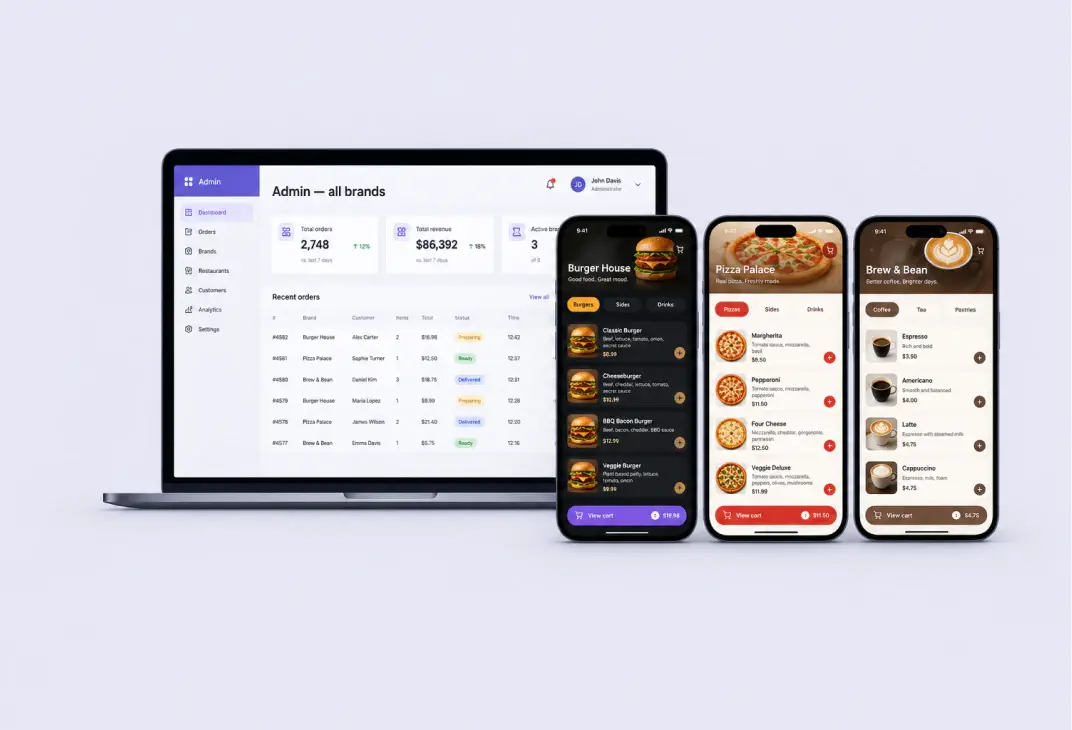
One admin panel, three brand apps on the same backend

Our approach

One backend for every brand, not one app per brand

Each brand keeps its own look in the app and on the website. Menus, prices, 86'd items, guests and orders live in one backend that talks to each location's POS. A franchisee on a different register gets orders the same way as a company-owned location, and a new brand launches as a setting.

Compare

Ready-made platform, white label or your own: which to choose

CriterionOrdering SaaSWhite label appAgency builddev.family
Several POS systems and brandsUsually one POSUsually one POSYes, at a costYes
Your own loyalty rulesTemplateTemplateYesYes
Per-order feeOn some plansOn some plansNoNo
Who's responsible after launchThe vendorThe vendorUntil handoverRun under an SLA
  • dev.family

    Our approach
    Several POS systems and brands
    Yes
    Your own loyalty rules
    Yes
    Per-order fee
    No
    Who's responsible after launch
    Run under an SLA
  • Other options

    Ordering SaaS

    Several POS systems and brands
    Usually one POS
    Your own loyalty rules
    Template
    Per-order fee
    On some plans
    Who's responsible after launch
    The vendor
  • White label app

    Several POS systems and brands
    Usually one POS
    Your own loyalty rules
    Template
    Per-order fee
    On some plans
    Who's responsible after launch
    The vendor
  • Agency build

    Several POS systems and brands
    Yes, at a cost
    Your own loyalty rules
    Yes
    Per-order fee
    No
    Who's responsible after launch
    Until handover

Honestly

When a ready-made platform is enough

Under 10 locations on one POS with standard loyalty: Toast, Square or Owner.com. Up to 30 locations on one POS: a white label app on a vendor's platform. Call us when brands run different POS systems, your loyalty doesn't fit a template, or per-order fees add up across many locations.

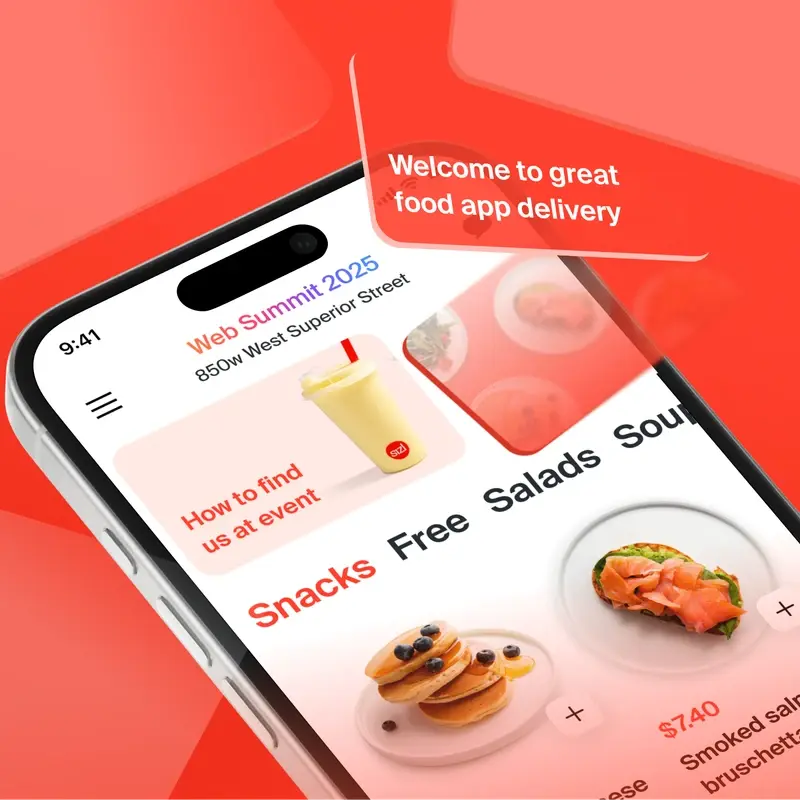
Sizl app screens

Case · US

Sizl: its own ordering app, rebuilt in 2.5 months

A dark-kitchen chain in Chicago. We rebuilt its customer ordering app in React Native on the client's existing backend in 2.5 months, plus a month of full testing, and added pickup, event orders and loyalty. New features now ship in 1–2 days on average. A few weeks after release, Sizl raised a $3.6M seed round.

What we find on ordering launches · November 2026

Where it usually hurts

  • Preorders and card holds. A card authorization doesn't last forever. Orders for later have to fit the hold window, or the money is released before the kitchen cooks.

  • Statuses. Delivery and pickup need different status flows. Guests call the store when the app can't say “running late” or refund one missing item.

After launch

How we run ordering after launch

  • Releases

    Soft and forced app updates from the admin panel.

  • Orders

    An order that doesn't reach the POS raises an alert.

  • Incidents

    On-call engineer, fix under the SLA, a monthly report.

Questions

Didn't find your answer? Ask on the call.

  • It's the app and website where guests order pickup or delivery, plus the backend that sends each order to the right location's POS and kitchen. For a single restaurant, it's usually a feature of the POS. For a group, it's a system of its own: one menu, prices and 86'd items for every brand and location, connected to whatever POS each location runs.

  • Ready-made platforms charge a monthly fee per location, and some add a percentage of each order; the numbers with sources are in the table above. Your own app and website on your POS starts at $100,000, with no per-order fee. We fix the estimate after the Assessment.

  • We rebuilt Sizl's customer app on its existing backend in 2.5 months, plus a month of testing. A full platform with a new backend, several POS systems and loyalty takes longer; we fix the timeline in the estimate after the Assessment.

  • Through a POS integration. An order from the app lands in the location's POS and on the kitchen screen like any order rung up at the counter. The app reads the menu, prices and 86'd items from the same source, so nobody keeps them in two places.

  • Availability is tied to the location, not the brand. When the kitchen 86's a dish, it disappears from that location's menu in the app and on the website, and stock is checked again right before payment. Guests can switch to another location that still has it.

  • Under 10 locations on one POS, a ready-made platform is almost always cheaper. Your own system pays off when brands run different POS systems, your loyalty rules don't fit a template, or per-order fees add up across many locations.

  • Sizl, a dark-kitchen chain in Chicago, is our US project. For a 16-brand restaurant group in Saudi Arabia, Kuwait, the UK and the US, we're launching its own ordering and delivery. Our Lisbon workday matches the UK and overlaps with US mornings.

Show us your brands and POS systems

We'll tell you whether your own ordering pays off and what it takes to run it at every location.

CaseSizl, a Chicago dark-kitchen chain: ordering app rebuilt in 2.5 months

a free call, then a 2–3 week Assessment, then Build. The Build estimate is fixed after the Assessment. How our packages work: How we work

Own tech team?Already have a tech team? We build the piece you're missing — the mobile app, the UX, a module — at a fixed price, then hand it over or run it.

Max will reply within 1 business day and suggest a time for a call.

Who are you
How many locations
What's happeningpick any
Your POSoptional